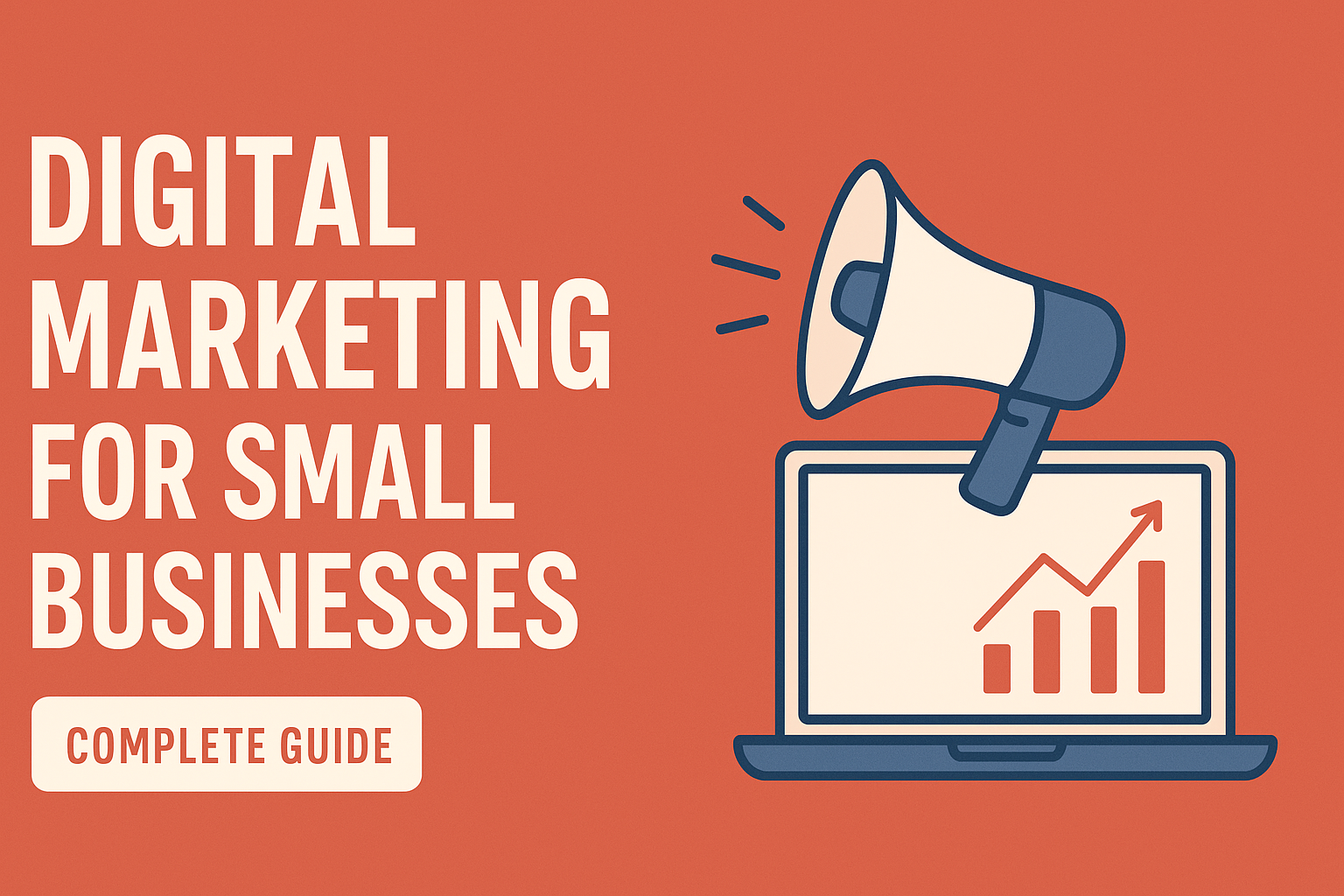
Digital Marketing for Small Businesses | Complete Guide
Digital marketing is no longer optional for small businesses—it’s the foundation of visibility, credibility, and growth. With consumers increasingly relying on Google, social media, and AI-driven search, small businesses must establish a strong digital presence to stay competitive.
Whether you run a local shop, a service business, or an online startup, this in-depth guide will help you understand how digital marketing for small businesses works, how to choose the right strategies, and how to create campaigns that deliver long-term ROI.
✅ Why Digital Marketing Matters for Small Businesses
Small businesses often operate with limited budgets, which means every marketing effort must generate measurable results. Digital marketing allows brands to:
- Reach customers affordably
- Promote products and services in real time
- Compete with larger brands
- Build trust and local credibility
- Track analytics and improve performance
- Increase leads, conversions, and sales
Unlike traditional advertising, digital marketing is targeted, scalable, and data-driven, making it the most cost-effective growth solution for small businesses.
⭐ Top Digital Marketing Strategies for Small Businesses (2025 Edition)
Below are the most impactful strategies that help small businesses grow sustainably.
🔥 1. Local SEO: The Foundation of Small Business Marketing
If your business depends on local customers, Local SEO is the #1 priority.
What Local SEO Helps You Achieve:
- Rank in Google’s local map pack
- Appear for “near me” searches
- Increase foot traffic
- Build trust with local consumers
Key Local SEO Steps:
- Optimize your Google Business Profile
- Add accurate NAP (Name, Address, Phone) consistency
- Target local keywords like “best digital marketing in Mumbai”
- Get organic positive reviews
- Add schema markup (LocalBusiness schema)
- Build local citations
💡 Want to learn more? Check out related content on kairo360blog.com (Internal Link Placeholder).
Recommended External Resource
- Google Business Profile Official Guide : Google Search Central
🔥 2. Create High-Quality Content That Builds Authority
Search engines prioritize helpful, expert-driven content. This is where E-E-A-T becomes essential.
Types of content small businesses should create:
- Blog posts
- How-to guides
- Listicles
- Videos
- FAQ pages
- Case studies
- Infographics
What Content Should Focus On:
- Solving customer problems
- Answering high-intent questions
- Demonstrating expertise
- Providing actionable solutions
💡 For example: “How to maintain your AC in summer” (for a local AC repair business).
🔥 3. Social Media Marketing for Brand Visibility
Small businesses rely heavily on social media for awareness and engagement.
Best Platforms for Small Business:
- Instagram – visuals + reels
- Facebook – local groups + ads
- LinkedIn – B2B brand building
- YouTube – authority-building videos
- WhatsApp Business – instant communication
Social Media Growth Tips:
- Use short-form video
- Post consistently
- Collaborate with micro-influencers
- Run engagement-driven ads
- Share customer testimonials
🔥 4. Paid Advertising (PPC) for Quick Results
Paid ads help small businesses scale faster when done correctly.
Best PPC channels:
- Google Ads
- Meta (Facebook & Instagram) Ads
- YouTube Ads
- LinkedIn Ads (B2B)
High-ROI PPC Tips:
- Target low-cost, high-intent keywords
- Use retargeting ads
- Run conversion-focused landing pages
- Track all conversions with analytics
🔥 5. Email Marketing for Nurturing & Retention
Email remains one of the strongest digital marketing channels.
Why Email Works:
- Low cost
- High ROI (up to 4200%)
- Personalized communication
Best Email Types:
- Welcome sequence
- Newsletter
- Promotional emails
- Abandoned cart emails (for e-commerce)
🔥 6. Building Trust Through Reviews & Reputation Management
Consumers trust businesses with genuine reviews.
Tips for review building:
- Request reviews ethically
- Respond to every review
- Showcase testimonials on your website
- Use review widgets
⭐ AEO (Answer Engine Optimization) for 2025
To rank for voice search and AI search engines, you must optimize your content for:
- Direct answers
- Micro-answers
- Clear headings
- FAQ-style content
- Structured data
This helps small businesses appear in:
- Google Featured Snippets
- People Also Ask
- AI answer engines
- Voice search devices
⭐ GEO (Geographic SEO) Optimization
GEO SEO helps small businesses rank locally and regionally.
GEO SEO Tactics:
- Geo-targeted keywords
- Region-specific landing pages
- Local backlinks
- Mentioning nearby landmarks
- Sharing location tags on social media
⭐ FAQs (Schema-Optimized)
1. What is digital marketing for small businesses?
It’s the use of online strategies like SEO, social media, PPC, and content to attract customers and grow small businesses affordably.
2. How much should a small business spend on digital marketing?
Small businesses typically spend 5–15% of revenue, depending on goals and competition.
3. Which digital marketing strategy is best for small businesses?
Local SEO, social media, and PPC provide the best quick wins.
4. How long does it take to see results?
SEO takes 2–6 months. PPC delivers results instantly. Social media varies by consistency.
5. Can small businesses compete with big brands?
Yes. Digital marketing creates a level playing field through targeted ads and niche content.
⭐ Conclusion
Digital marketing is the ultimate growth engine for small businesses in 2025. By focusing on Local SEO, social media, content marketing, email marketing, and smart paid ads, small businesses can build visibility, authority, and consistent revenue.
With the right strategy, even a small business can outperform big competitors by being smarter, faster, and more customer-focused.
If you need a customized strategy, you can explore more insights at kairo360blog.com.